This is a new series where I talk buildings, why I draw them and the techniques I use when putting them to paper.
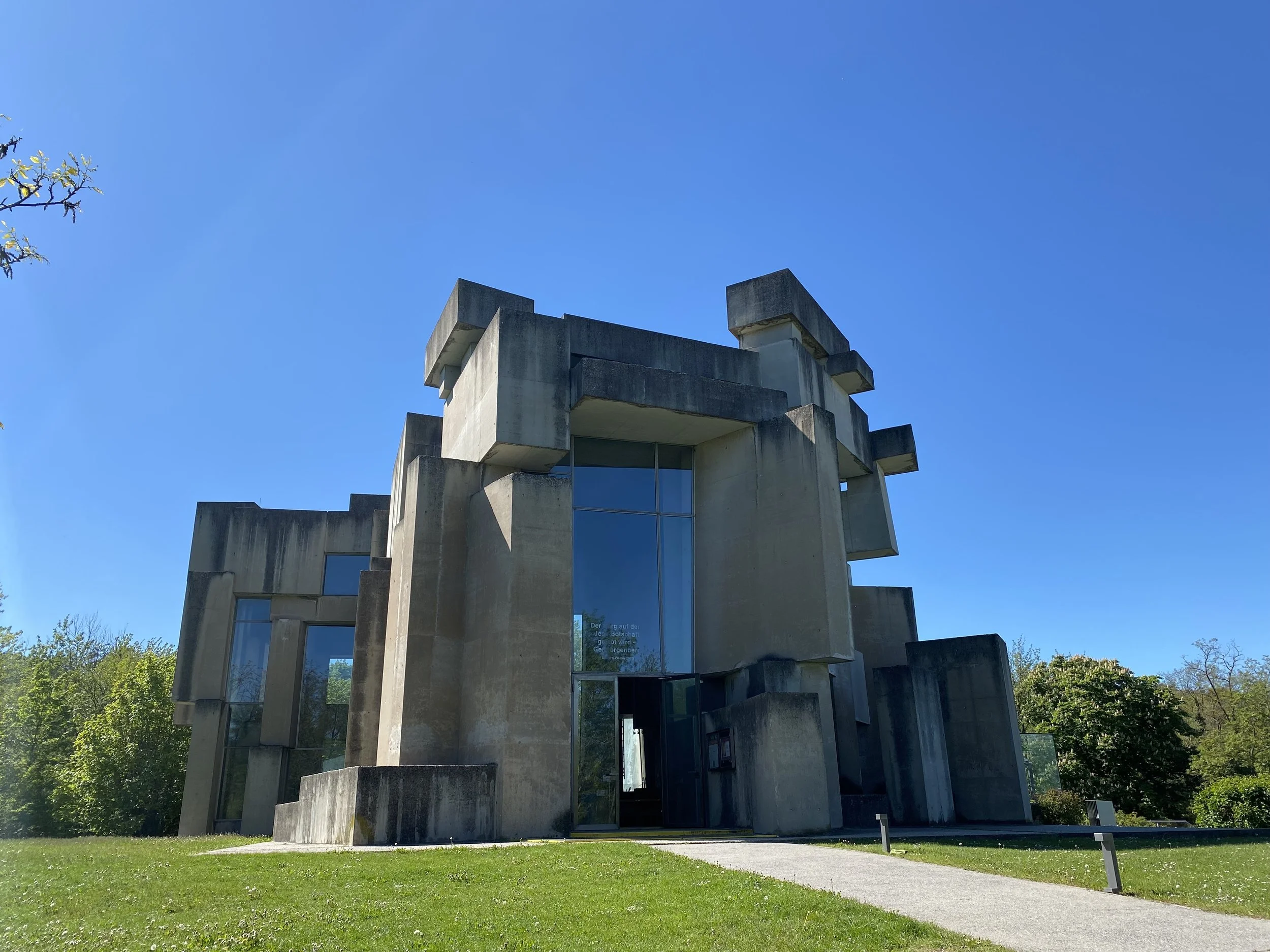
For the first in the series I’ve decided to feature a favourite of mine, a piece of Brutalist architecture that can literally be classed as sculpture- Wotruba Kirche Vienna.
I won’t go too much into the history of the building as there are people far more talented and qualified to inform you of such things, but I will start by giving you a small rundown of the church.
Wotrubakirche (or the Kirche Zur Heiligsten Dreifaltigkeit - Church of the Most Holy Trinity to give it its full title) is positioned in the Mauer District of Leising in Vienna. It was designed by the sculptor Fritz Wotruba with Fritz Gerhard Mayr acting as planning architect. Built between 1974 and 1976, Fritz Wotruba sadly died before his masterpiece was completed.
I visited the church back in 2024 as it has always been on my Brutalist bucket-list. Often when you visit a building for the first time, a lot of things regarding the location differ from what you may expect, be it neighbouring buildings closer than thought or the are appearing in seclusion but actually heavily built up. Often photographers capture buildings at first light when crowds are at their minimum and the light is beautifully cast- arriving to a large crowd at midday can often disappoint.
With Wotrubakirche however, this couldn’t be further from the case, I had a lovely spring walk up through what appeared a pretty affluent neighbourhood, passing stylish houses and beautifully tended gardens. Even a beautiful Lancia Beta convertible in immaculate condition parked outside.
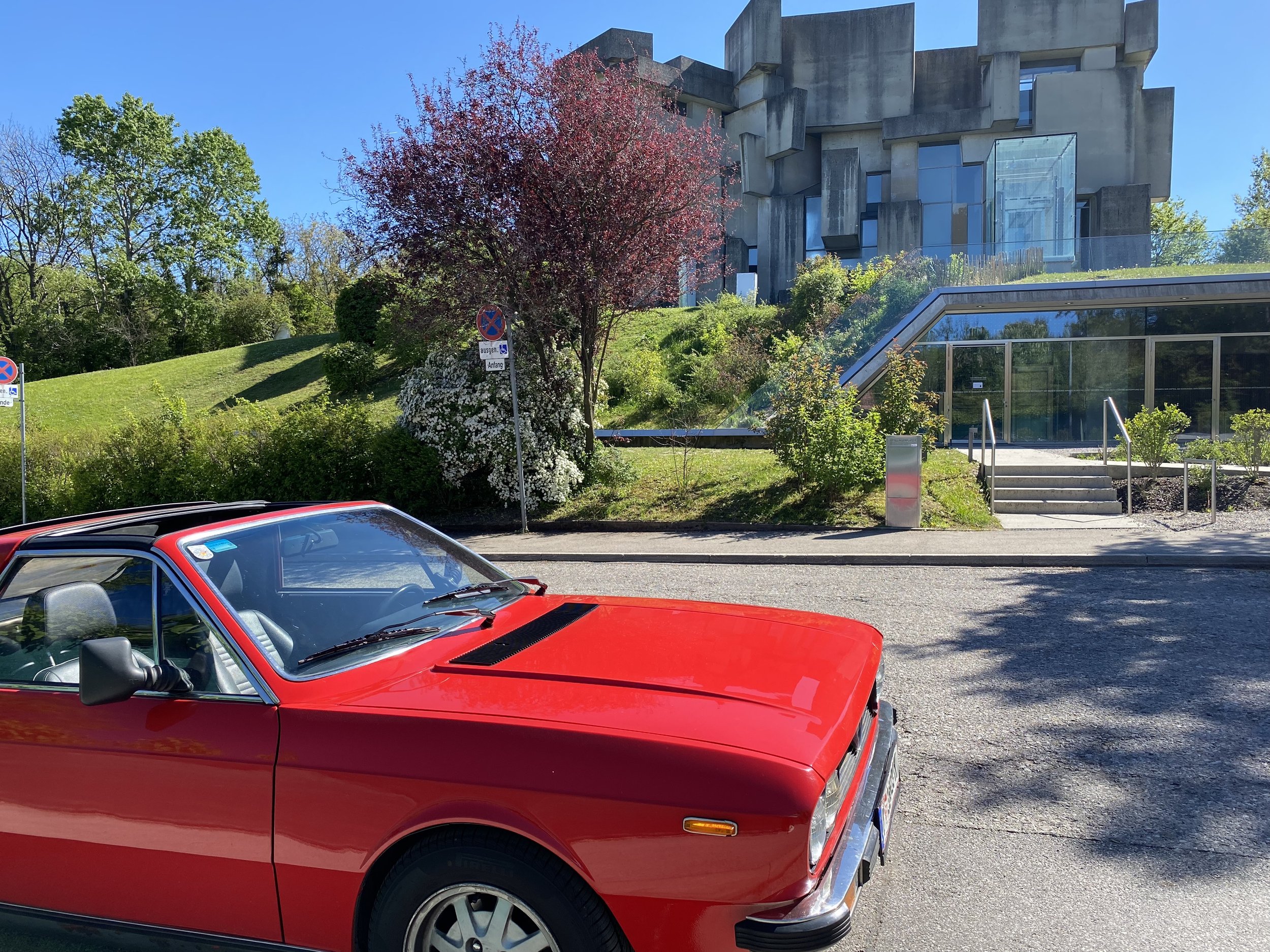
When I approached the building, it stood in stunning green grounds. Only a small handful of people explored the site but did so in a quiet, completive manner in fitting with a church. Despite its beauty and uniqueness, I loved to see the way it functioned as a regular church- posters for children’s clubs, health classes and community groups.
The building itself is pure Brutalist A-lister, made up of concrete cubes and arranged in manner that is more sculpture than function. The light casts in an amazing ad-hoc of shapes and patterns over the beautifully aged concrete. It sits with prominence- not in an overpowering way- more sitting up to show that it’s there for you, friendly despite its harsh lines and muscular appearance.
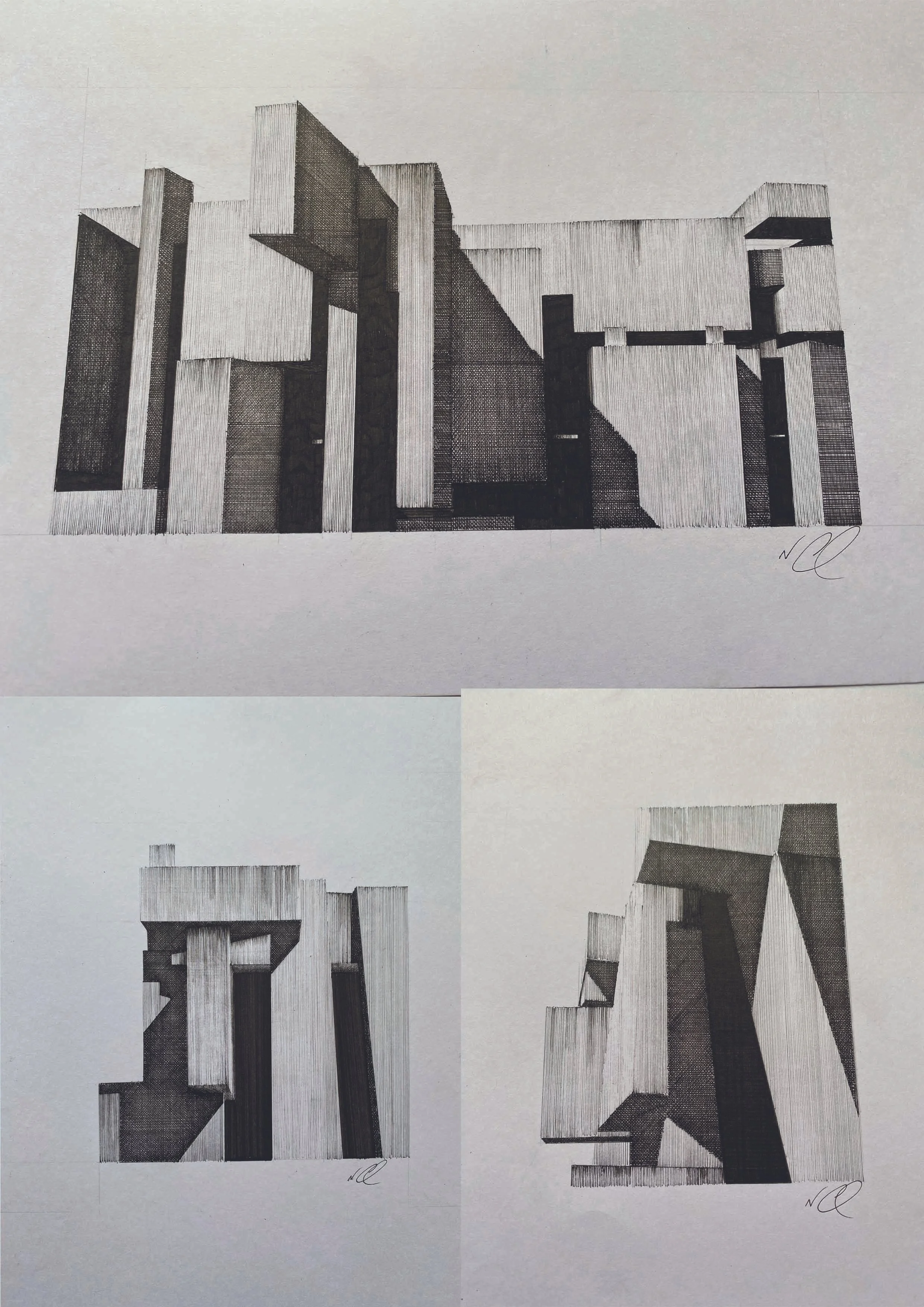
Each angle is a joy to sketch and differs with the changing shadows as the day progresses. The compositions available work almost in abstraction even when each pen stroke and piece of perspective is literal.
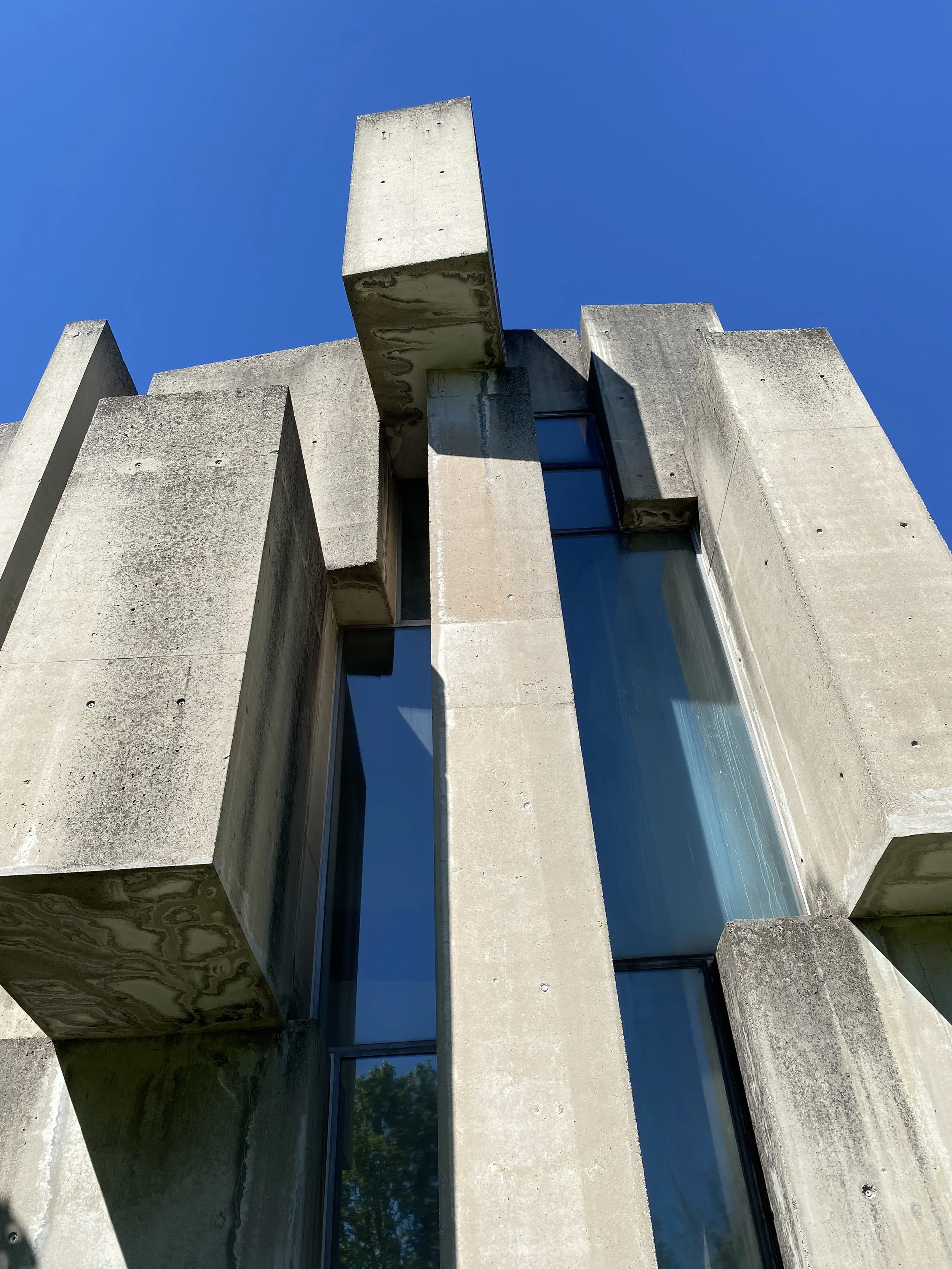
so If you ‘re ever in Vienna and find yourself at a loose end, there’s worse things you could do then grab a sketchbook and have a couple of calm, sunny hours capturing what in my opinion is one of the most beautiful pieces of brutalism on the planet- certainly to draw.